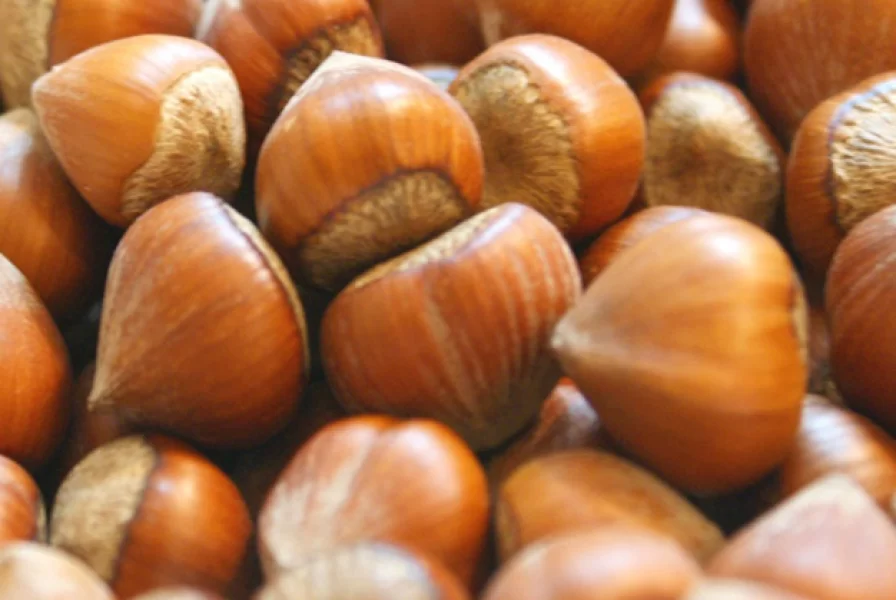
Turkish hazelnuts are divided into two quality groups: Giresun and Levant.
Giresun quality: Tombul (round) hazelnuts grown throughout Giresun province, together with the Tombul hazelnuts of the Beşikdüzü, Vakfıkebir, Çarşıbaşı and Akçaabat districts of Trabzon, which share most of the Giresun characteristics. They are regarded as the finest hazelnuts in the world and blanch (shed their skin) more readily than any other hazelnut variety.
Levant quality: The collective name for hazelnuts grown outside the Giresun quality area. Named after where they grow (Levant Akçakoca, Levant Ordu, Levant Trabzon and Levant Samsun), they contain less oil than Giresun quality hazelnuts, yet generally more oil than hazelnuts grown in other countries, and are of superior flavour.
In-Shell Hazelnuts
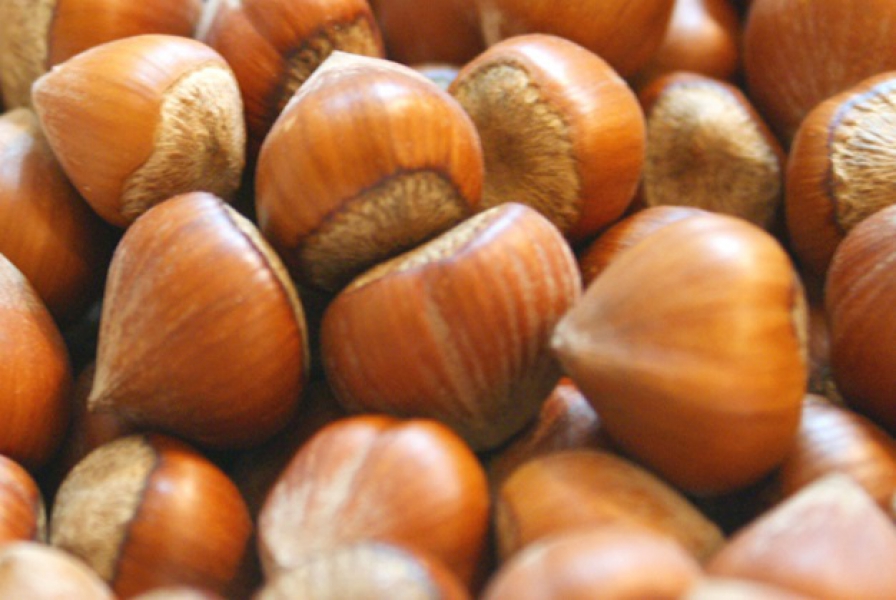 Round hazelnuts (Tombul): Spherical hazelnuts whose length, width and thickness are almost the same. They are generally medium-sized, high-quality varieties with a high kernel yield and high oil and protein content. All varieties that blanch easily belong to this group, and their round shape makes them well suited to cracking. The Giresun Tombul hazelnut is the finest variety in this group; Palaz, Mincane, Foşa, Kan, Çakıldak and Kara also belong to it.
 Pointed hazelnuts: Varieties whose length is slightly greater than their width and thickness. They suffer more losses during cracking and are therefore mostly marketed in-shell. Varieties include Sivri and İncekara.
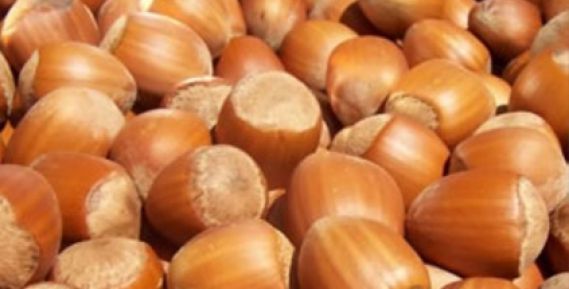 Almond-shaped hazelnuts: Varieties whose length is considerably greater than their thickness and width. They are large and attractive but of lower quality and are not suited to cracking and processing. They are mostly eaten in-shell as a snack. The two varieties are Round Almond and Flat Almond.
Hazelnut Kernels
Kernels are hazelnuts removed from the hard shell and are graded by diameter: Standard 1 (13-15 mm), Standard 2 (11-13 mm) and Standard 3 (9-11 mm). They are the raw material for all processed and further-processed hazelnut products.
Processed Hazelnut Products
Blanched hazelnut kernels
Kernels whose skin has been removed, separated from partially blanched kernels. Used in the chocolate industry and in salted hazelnut production.
Roasted hazelnut kernels
Kernels roasted lightly, medium or dark as required, fully skinless or partially skinned. Used in the chocolate industry and eaten as snack nuts.
Diced hazelnuts
Natural or roasted kernels cut into pieces of defined millimetre sizes (2-4 mm, 3-5 mm, etc.). Used in ice cream, biscuits, chocolate and bakery.
Sliced hazelnuts
Kernels cut into slices. Used in bakery and pastry.
Ground hazelnuts (hazelnut flour)
Natural or roasted kernels ground using the appropriate technique. Used in bakery, biscuits and ice cream.
Hazelnut paste
Made from kernels that have been roasted and partly or fully skinned, crushed into small particles or completely into a smooth, homogeneous paste, with various flavourings and, where needed, additives. Eaten directly and used in the chocolate and bakery industries.
Hazelnut purée
A semi-finished product made by crushing roasted kernels (light, medium or dark roast), used to make hazelnut paste and similar products. Used in ice cream and chocolate making.
Oil-roasted or salted whole hazelnuts
Kernels roasted with salt or fried in edible oil. Sold directly to consumers.
Roasted in-shell hazelnuts
In-shell hazelnuts that are cracked and roasted, sometimes with salt. Sold directly to consumers.
Written by Tahsin Fındık · Last updated: